


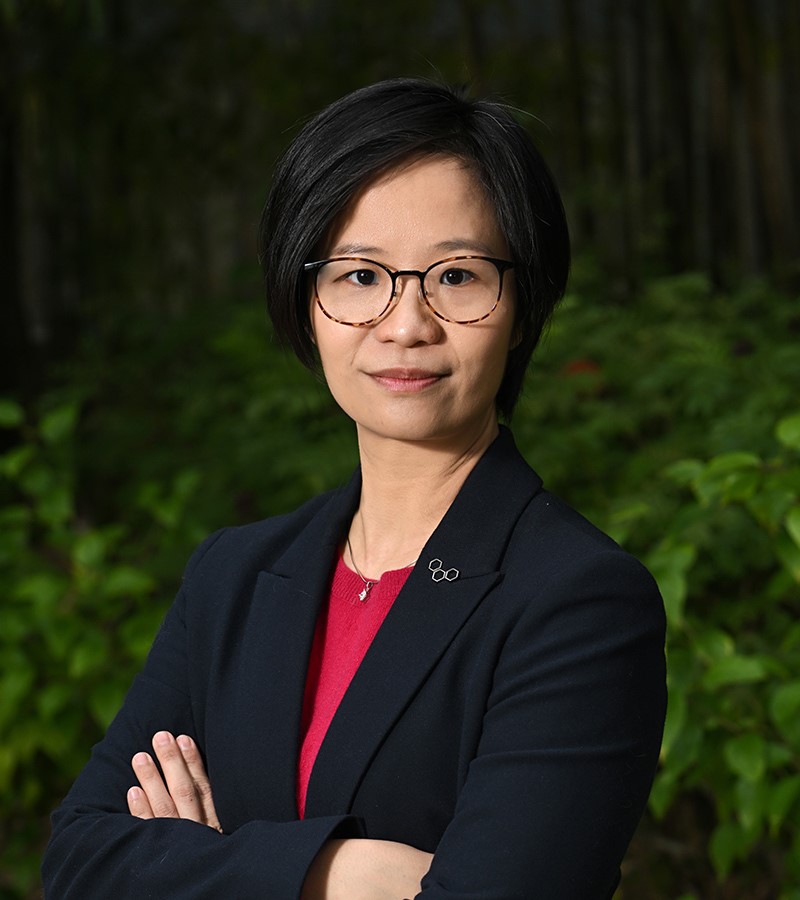
Research Assistant Professor
劉友璞博士
BSc (HKU), MMedSc (HKU), DPhil (Oxon)
Fax: (852) 2667-5464
Email: yaupoklau(at)cuhk.edu.hk
ORCID: 0000-0003-2257-2344
GCNI : https://gcni.cuhk.edu.hk/our-people-detail/?cateId=46&id=2185
IRIS: https://research.cuhk.edu.hk/en/persons/lau-yau-pok
- Visiting Research Fellow at the University College London
- Researcher at the International Brain Lab
- Biological mechanisms underlying neuropsychiatric disorders
- Circuit-based neuropathological states classification
- Cross-species comparison models
- Computation psychiatry
- Digital mental health
We study the biological mechanisms behind heritable psychiatric disorders like schizophrenia, bipolar disorder, and autism spectrum disorder (ASD). Our goal is to find new ways to understand, classify, and treat these brain disorders.
.
These disorders have strong heritable causes but are characterized as pathologies of the mind. Traditional research methods struggle to study the biological mechanisms behind subjective clinical measures. Our research uses electrical profiles of brain networks to objectively classify perception and cognitive processes. We combine computational models with observations to analyze neuropathological dynamics in humans and mice. Our recent work has established single-cell resolution circuit pathologies in ASD mouse models across multiple brain regions.
.
We bridge understanding from genetics, molecular pathways, cellular, metabolic, and immunologic factors with clinical observations using this cross-species approach. By combining high-density biological measurements, causal manipulation, and computational modeling, we aim to develop targeted neuropsychiatric diagnostics and treatments.
.
Our current projects address three key questions:
1. How do single-cell dynamics link biological mechanisms to circuit pathology and symptoms? Can brain-wide circuit pathologies improve understanding of perception and identify new treatment?
2. How do external factors like gut microbiomes, sleep abnormalities, and environmental stress influence pathological states and circuit dynamics, and how do these interactions evolve with disease progression and symptoms?
3. Can artificial intelligence be applied to large digital behavioral datasets to improve asymptomatic brain disorder detection and bio-subtyping of neuropsychiatric disorders in the community?
2023 The Kavli Foundation NWB Hackathon Award.
2015-2020 Medical Research Council Postdoctoral Training Fellowship, MRC, UK.
2019 FENS IBRO Travel Award, FENS, EU.
2019 Guarantors of Brain Travel Award, Guarantors of Brain, UK.
2019 The Carl Storm Diversity Fellowship, Gordon Research Conference.
2019 Medical Research Council Recognition Award for Public engagement, MRC Harwell Institute, UK.
2018 The 41st Japanese Neuroscience Society Annual Meeting Travel Award, JNS, Japan.
2017 Medical Research Council Special Award Scheme Award, MRC Harwell Institute, MRC, UK.
2017 Travel Award for the 19th Annual Genes, Brain and Behavior Meeting of The International Behavioural and Neural Genetics Society, Madrid, Spain.
2016 Training Grant for mouse genetics course, Wellcome Genome Campus, Hinxton, Cambridge, UK.
2014 Medical Research Council Anatomical Neuropharmacology Unit Travel Award for Inhibitory Control of Brain Plasticity Conference, Poland.
2013 Great Britain-China Educational Trust Scholarship, Great Britain-China Educational Trust, UK.
I am dedicated to cultivating a positive lab culture that values both individual wellbeing and productivity. My aim is for my team to reach their full potential in a safe, fair, equitable, and informed environment.
This handbook sets out the processes that I am committed to create such an environment. It is the outcome of a dedicated international workshop, “SAFE Labs,” held in 2024, which focused on identifying the key barriers to establishing Aware, Fair, and Equitable Labs. The participants in the inaugural workshop developed guidelines that serve as the foundation for this handbook, and we look forward to reviewing and updating it to reflect our ongoing progress in this area.

We are hiring Junior Research Assistant(s) and Research Assistant(s) for the Microbiome-Gut-Brain Projects. These projects have been established through collaborations with the Hub of Advanced Technology for Child Health, the Microbiota I-Center, and the International Brain Lab. We aim to leverage multi-disciplinary insights and tools to study circuit-based neuropathological conditions observed in humanised animal models. This research aims to dissect into the intricate dynamics within the gut-brain axis, from genetic and cellular activities to circuits, system functions, and behaviour.
Please see Job post #24000335 for details and feel free to contact me for further information.
We look forward to hearing from you.
- International Brain Laboratory, Kush Banga, Julius Benson, Jai Bhagat, Dan Biderman, Daniel Birman, Niccolò Bonacchi, Sebastian A Bruijns, Kelly Buchanan, Robert AA Campbell, Matteo Carandini, Gaelle A Chapuis, Anne K Churchland, M Felicia Davatolhagh, Hyun Dong Lee, Mayo Faulkner, Berk Gerçek, Fei Hu, Julia Huntenburg, Cole Lincoln Hurwitz, Anup Khanal, Christopher Krasniak, Petrina Lau, Christopher Langfield, Nancy Mackenzie, Guido T Meijer, Nathaniel J Miska, Zeinab Mohammadi, Jean-Paul NoelLiam Paninski, Alejandro Pan-Vazquez, Cyrille Rossant, Noam Roth, Michael Schartner, Karolina Z Socha, Nicholas A Steinmetz, Karel Svoboda, Marsa Taheri, Anne E Urai, Shuqi Wang, Miles Wells, Steven J West, Matthew R Whiteway, Olivier Winter, Ilana B Witten, Yizi Zhang
Reproducibility of in vivo electrophysiological measurements in mice
Elife. 2025 May 12:13:RP100840. doi: 10.7554/eLife.100840. - Bruijns S. A., International Brain Laboratory, Bougrova K, Laranjeira I.C., Lau P. Y. P., Meijer G. T., Miska N. J., Noel J.-P., Pan- Vazquez A., Roth N., Socha K. Z., Urai A. E., Dayan P.,
Dissecting the Complexities of Learning With Infinite Hidden Markov Models
Nature Neuroscience, (2023, accepted). - .Findling C., Hubert F., International Brain Laboratory, Acerbi L., Benson B., Benson J., Birman D., Bonacchi N., Carandini M., Catarino J. A., Chapuis G. A., Churchland A. K., Dan Y., DeWitt E.J., Engel T. A., Fabbri M., Faulkner M., Fiete I. R., Freitas- Silva L., Gerçek B., Harris K. D., Häusser M., Hofer S. B., Hu F., Huntenburg J. M., Khanal A., Krasniak C., Langdon C., Latham P. E., Lau P. Y. P., Mainen Z., Meijer G. T., Miska N. J., Mrsic-Flogel T. D., Noel J.-P., Nylund K., Pan-Vazquez A., Paninski L., Pillow J., Rossant C., Roth N., Schaeffer R., Schartner M., Shi Y., Socha K. Z., Steinmetz N. A., Svoboda K., Tessereau C., Urai A. E., Wells M. J., West S. J., Whiteway M. R., Winter O., Witten I. B., Zador A., Dayan P., Pouget A.
Brain-wide representations of prior information in mouse decision-making
Nature, (2023, accepted).. - Bafna A., Lau PYP, Banks G., and Nolan PM,
Harvesting mouse suprachiasmatic nucleus (SCN) by vibrating microtome for diurnal transcriptome analysis
STAR Protocol, 2023, accepted. International Brain Laboratory, Banga K., et al. “Reproducibility of in-vivo electrophysiological measurements in mice,” bioRxiv, (2022, doi:10.1101/2022.05.09.491042).. - .Banks G, Guillaumin M, Heise I, Lau P, Yin MH, Bourbia N, Aguilar C, Bowl M, Esapa C, Brown L, Hasan S, Tagliatti E, Nicholson E, Bains RS, Wells S, Vyazovskiy VV, Volynski K, Peirson S.
Aberrant synaptic release underlies sleep/wake transition deficits in a mouse Vamp2 mutant
Science Advances, 12 Aug 2020, Vol 6, Issue 33, doi:10.1126/sciadv.abb3567.. - Lamsa K, Lau P.
Long-term plasticity of hippocampal interneurons during in vivo memory processes
Curr Opin Neurobiol, 2019 Feb;54:20-27, doi:10.1016/j.conb.2018.08.006.. - Stewart M, Lau P, Banks G, Bains RS, Castroflorio E, Oliver PL, Dixon CL, Kruer MC, Kullmann DM, Acevedo-Arozena A, Wells SE, Corrochano S, Nolan PM.
Loss of Frrs1l disrupts synaptic AMPA receptor function, and results in neurodevelopmental, motor, cognitive and electrographical abnormalities
Dis Model Mech, 2019 Jan 28, pii: dmm.036806, doi: 10.1242/dmm.036806..\. - Banks G, Lassi G, Hoerder-Suabedissen A, Tinarelli F, Simon MM, Wilcox A, Lau P, Lawson TN, Johnson S, Rutman A, Sweeting M, Chesham JE, Barnard AR, Horner N, Westerberg H, Smith LB, Molnar Z, Hastings MH, Hirst RA, Tucci V, Nolan PM.
A missense mutation in Katnal1 underlies behavioral, neurological, and ciliary anomalies
Mol Psychiatry, 2018 Mar;23(3):713-722, doi: 10.1038/mp.2017.54.. - Lau PY, Katona L, Saghy P, Newton K, Somogyi P, Lamsa KP.
Long-term plasticity in identified hippocampal GABAergic interneurons in the CA1 area in vivo
Brain Struct Funct, 2017 May;222(4):1809-1827, doi: 10.1007/s00429-016-1309-7.
Co-Supervisor of:
Mr. HUNG, Tin Shing Jacky
